Dren Eko, Čelarevo, Serbia
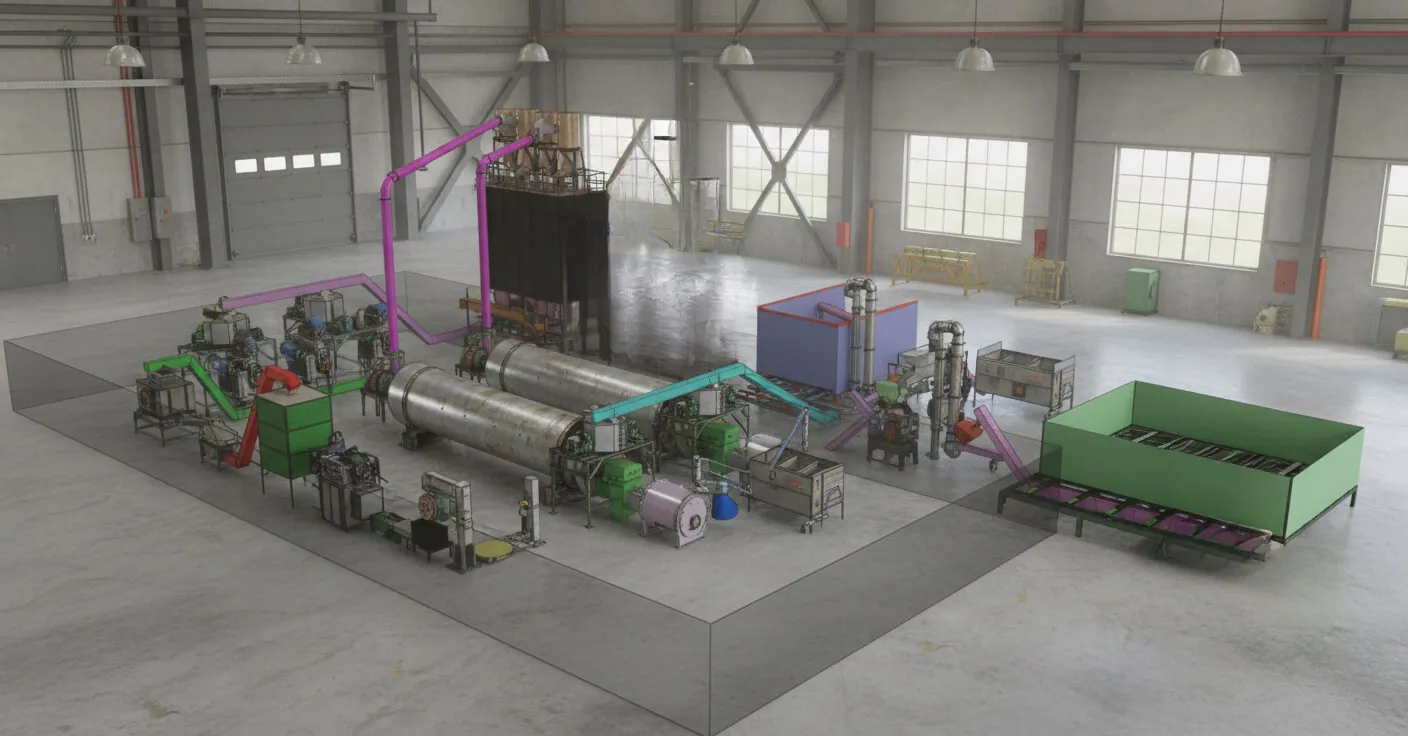
An AMP-530 pellet mill commissioned to turn wood waste into wood pellets.
Project news →AM Tehnolog designs and builds industrial pellet mills and complete lines around your production: animal feed, wood and agri-pellets, and organic fertiliser. You tell us what you produce, from what and how much, and we choose the pellet mill size, the die and the equipment around it. Four die sizes, from 304 to 650 mm, cover 1 to 18 tonnes of animal feed per hour.
The same family of machines handles very different raw materials, but the die, the raw material preparation and the rest of the line change. Choose your application to see the raw materials, parameters, models and frequently asked questions that apply to it.
Compound feed for pigs, poultry, cattle, sheep, rabbits and fish. Steam conditioning, hard pellets, diameter matched to the species.
Learn more →Sawdust, shavings, straw, maize stover and sunflower husks. Heating pellets in class A1, A2 or B.
Learn more →Chicken and cattle manure, compost and digestate. Pellets are easier to store and transport, and they spread more evenly.
Learn more →Husks, oilseed cakes, bran, beet pulp, brewers' grains and wood residues. From a disposal cost to a source of income.
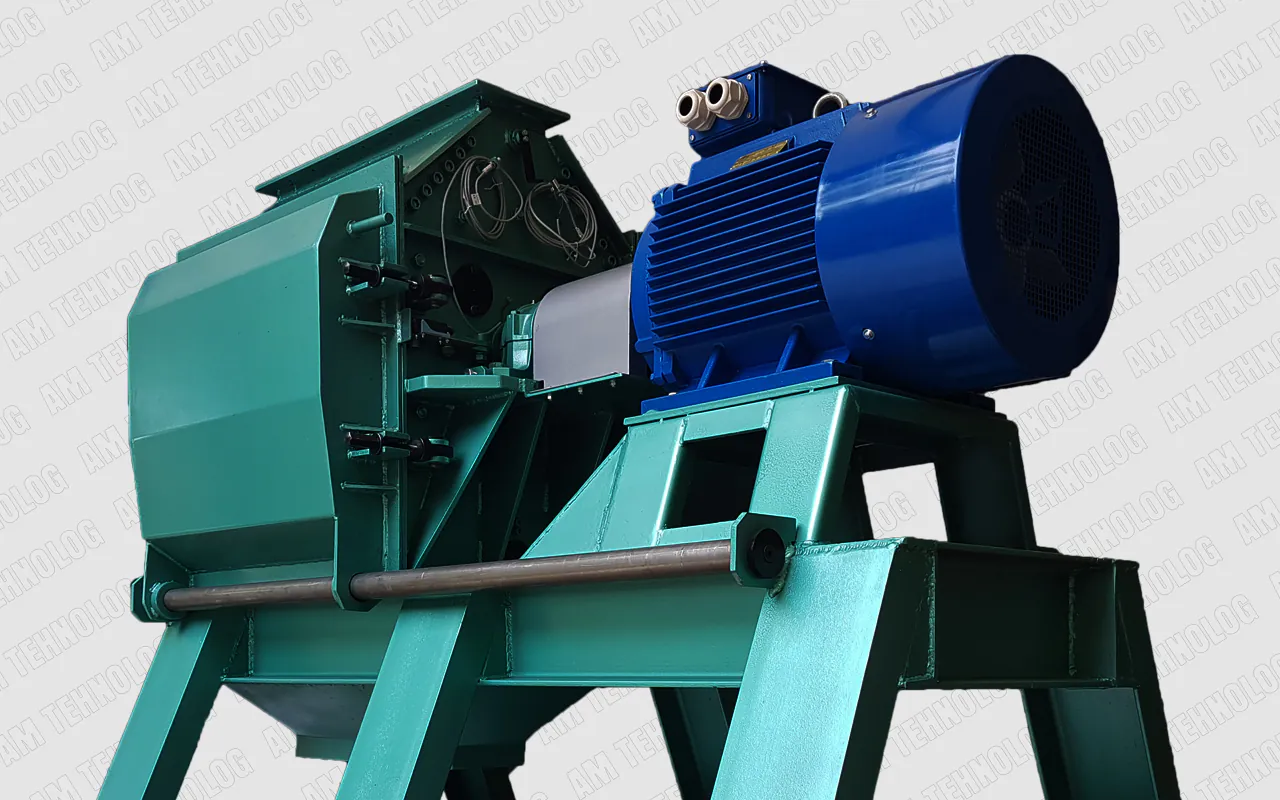
Learn more →The number in the model name is the ring die diameter. A larger die has a larger working area and, with a more powerful motor, gives a higher capacity.
| Specification | AMP-304 | AMP-420 | AMP-530 | AMP-650 |
|---|---|---|---|---|
| Die diameter | 304 mm | 420 mm | 530 mm | 650 mm |
| Die working width | 55 mm | 74 mm | 80 mm | 95 mm |
| Die working area | 525 cm² | 791 cm² | 1,331 cm² | 2,143 cm² |
| Pellet mill power | 37–55 kW | 90–110 kW | 110–150 kW | 180–220 kW |
| Mixer-conditioner power | 3 kW | 5.5 kW | 7.5 kW | 11 kW |
| Feeder power | 1.1 kW | 1.1 kW | 2.2 kW | 4 kW |
| Capacity: animal feed | 1–2 t/h | 3–5 t/h | 7–9 t/h | 15–18 t/h |
| Capacity: wood pellets | 0.5–0.6 t/h | on request | about 1.5 t/h | 2–4 t/h |
| Dimensions H × W × L | 1,675 × 1,650 × 1,690 mm | 2,150 × 2,150 × 2,600 mm | 2,150 × 2,150 × 2,410 mm | 2,150 × 2,450 × 2,710 mm |
| Weight | 1,800 kg | 5,050 kg | 6,200 kg | 7,500 kg |
Capacity depends on the raw material, moisture, pellet diameter and preparation. For animal feed we give the rated capacity; for wood pellets, the figures come from lines we have delivered (Foresta, Dren Eko, Romania). On wood, a pellet mill produces several times less than on animal feed, because pelleting wood takes about 50–70 kWh per tonne against 7–20 kWh for animal feed. For smaller farms there is also a smaller model with a capacity of up to 200 kg/h of animal feed.
A catalogue capacity only holds for a specific raw material and preparation. That is why we look at the raw material first and the model second.
Animal feed, wood, straw and manure each need a different die, preparation and power. Blends and by-products are assessed individually.
Work in tonnes of finished pellets per hour or per shift. For animal feed, start from the daily consumption of the farm or the sales of the feed mill.
Grinding to the right particle size, drying wet material and, for animal feed, steam conditioning determine both quality and capacity.
⚙️ AMC hammer mill →From 2–3 mm for poultry and fish to 6–8 mm for wood pellets and cattle. The die hole size and die thickness are matched to the raw material.
Check your available power supply, the space for the machine and for servicing it and, for animal feed, whether you have or plan a steam boiler.
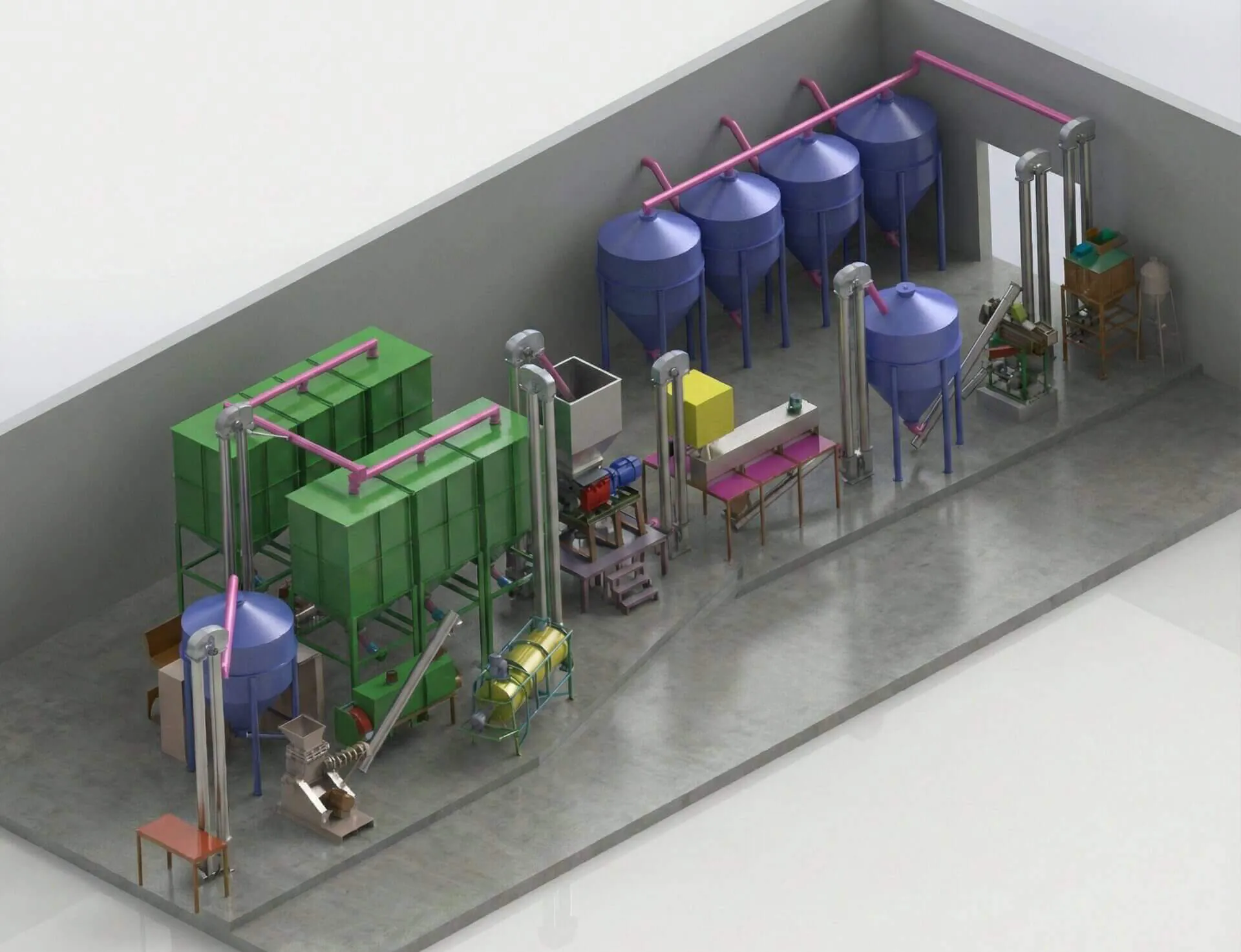
A pellet mill only performs well with the right mill, feeder, cooler and screen. We can add to your existing plant or design a new line.
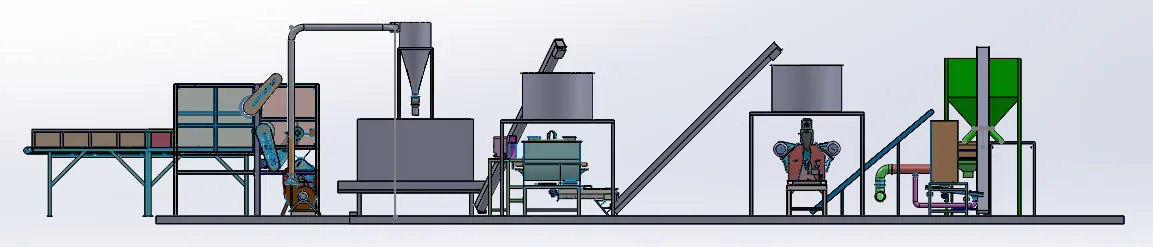
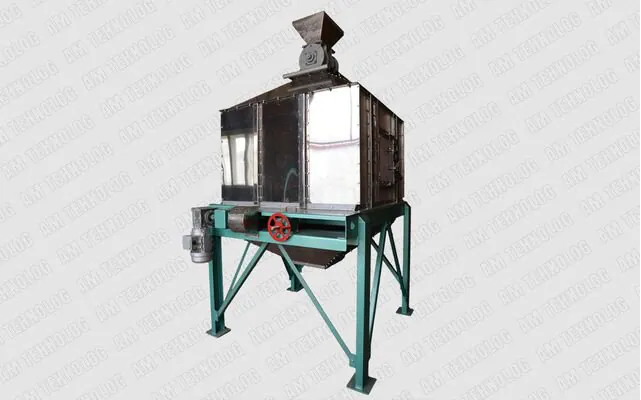
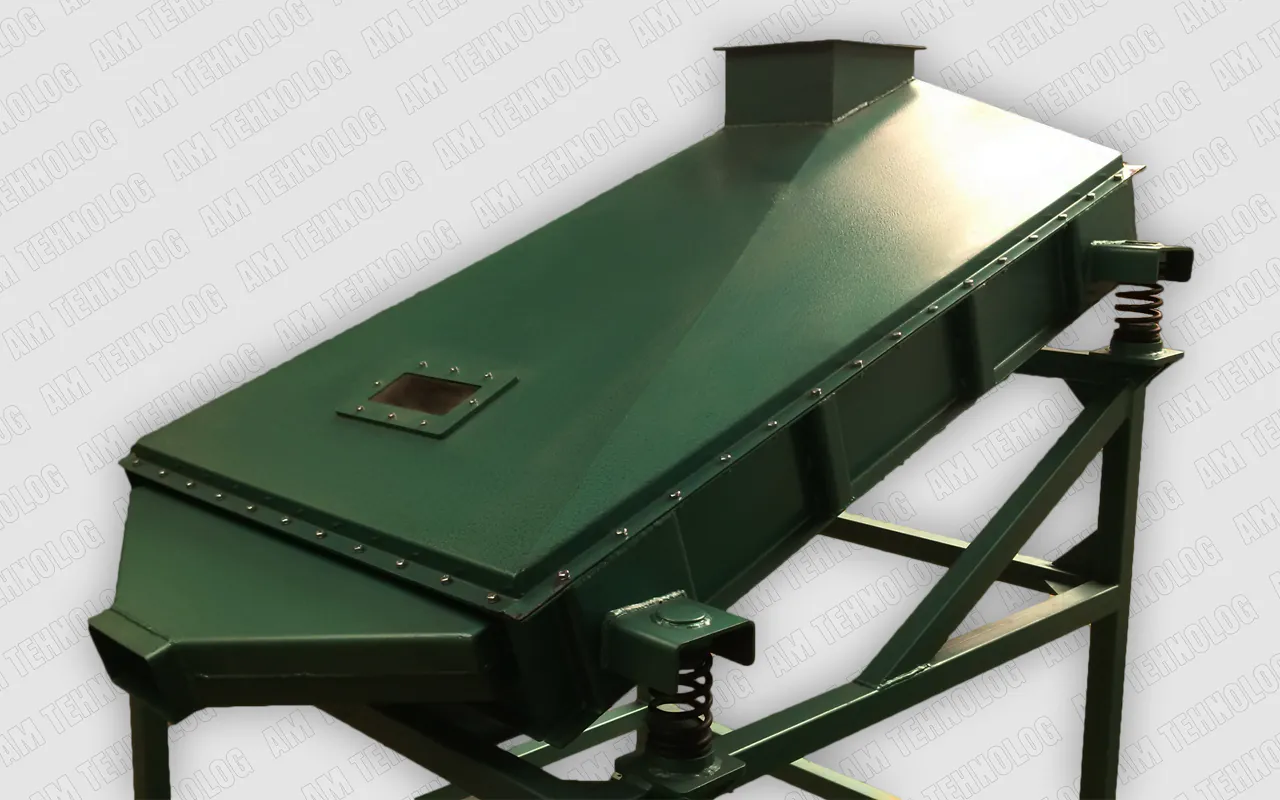
⚙️ Production lines →A feeder delivers the raw material evenly into the mixer-conditioner, where steam is added for animal feed. The material then enters the chamber with the rotating ring die, and the rollers press it through the die holes. Outside the die, knives cut the pellets to the set length. The hot pellets go on to the cooler and screen, and the fines return to the process.
Ring die or flat die? Flat-die mini pellet mills, the kind sold through online classifieds, are built for occasional use and small output. Industrial ring-die pellet mills run in shifts and have a conditioner, automatic lubrication and dies that are changed to suit the raw material. If you need more than a few hundred kilograms per hour, or pellets to sell, you need an industrial machine.
Tell us what you produce, from what and how much, and what you already have in your plant, and we will design the machine or the complete line to measure and send you a quotation.
An AMP-530 pellet mill commissioned to turn wood waste into wood pellets.
Project news →A complete plant with dosing, conveying and pelleting: up to 4 tonnes of pellets in an eight-hour shift.
Project news →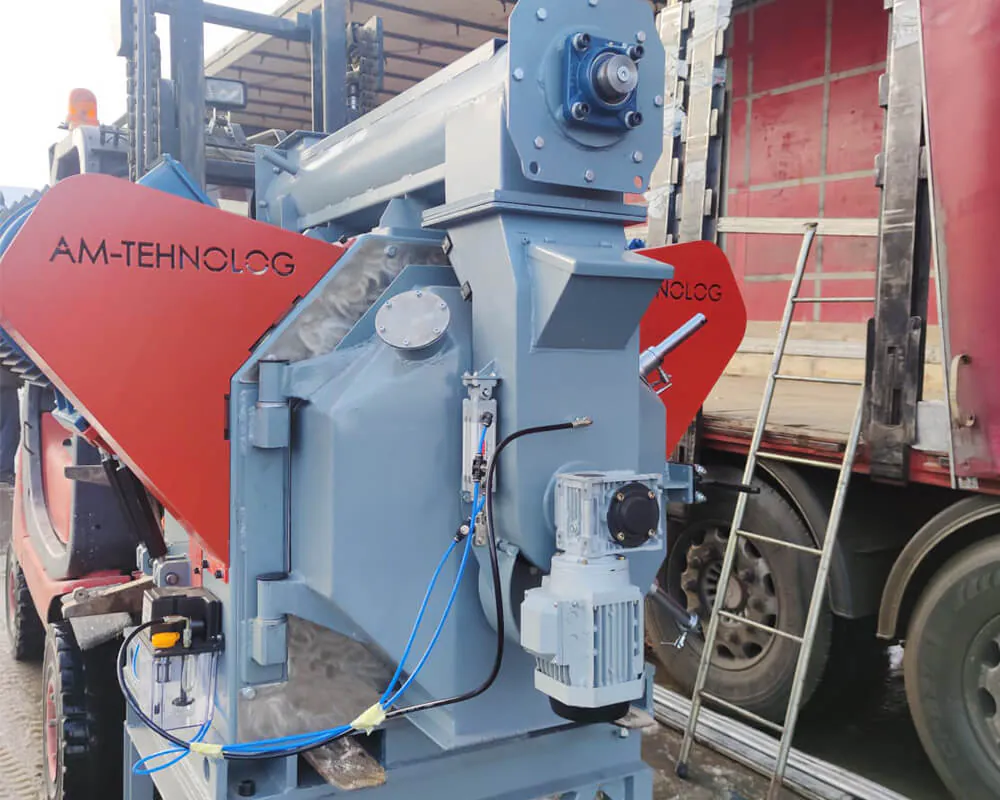
A line with an AMP-304 pellet mill, hammer mill, conveyors and bagging.
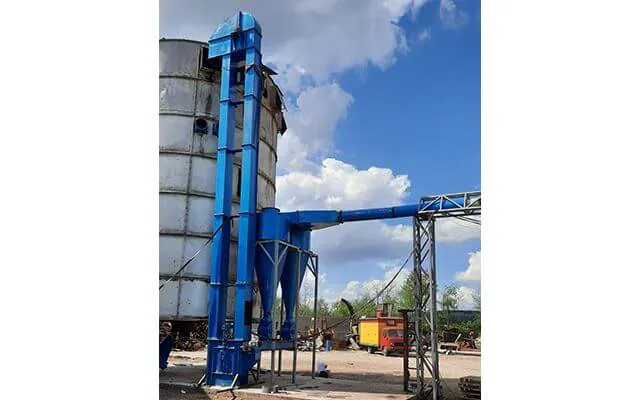
Installation of a complete pelleting plant with a bucket elevator and cyclones for pneumatic conveying, finished within four weeks of delivery.
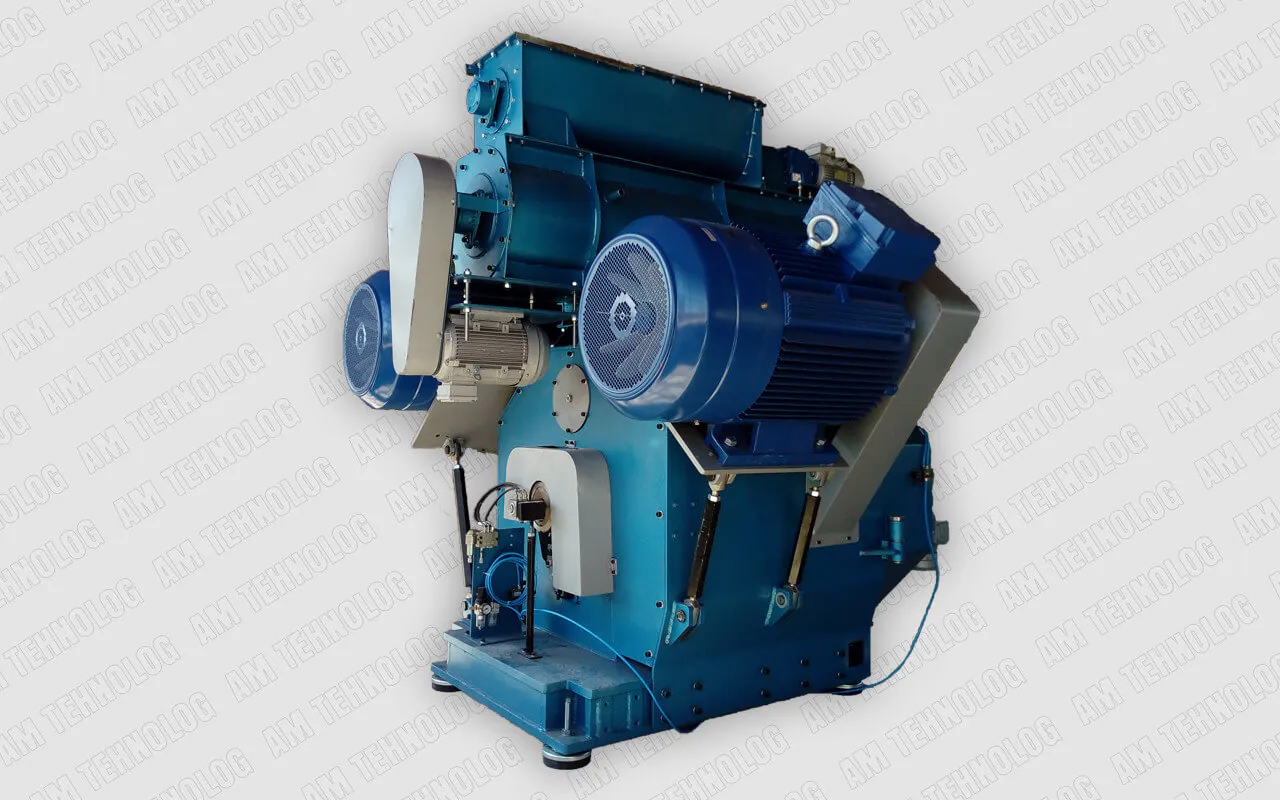
An AMP-530 pellet mill with automation for a large producer in Romania.
The delivered equipment is being installed and connected into a complete pelleting line.
Project news →On its very first run, the model for smaller farms produced good-quality pelleted feed.
Project news →Raw material first, then capacity. For animal feed, the AMP-304 covers up to 2 t/h, the AMP-420 3–5 t/h, the AMP-530 7–9 t/h and the AMP-650 15–18 t/h. On wood, the same models produce several times less, so the model is chosen by its capacity on wood. For blends and by-products, we base our assessment on a sample and data about the raw material.
Capacity depends on the raw material, moisture, particle size after grinding, pellet diameter and conditioning. The AMP-530 produces 7–9 t/h on animal feed and about 1.5 t/h on wood. That is why our quotations always state the capacity for your raw material, not just the catalogue figure.
The machine is similar, but the die (its thickness and the ratio of hole length to diameter), the rollers and the preparation differ. Animal feed is steam-conditioned and passes through the die easily. Wood needs drying to about 10–15% moisture, fine grinding and a die made for wood, and on wood a pellet mill uses several times more energy per tonne and has a lower capacity.
If you already have a mill, a mixing plant and a cooler, a pellet mill with a conditioner and feeder is enough. For new production, we design the complete line: grinding, dosing, conditioning, pelleting, cooling, screening and bagging.
We deliver standard machines in 4–8 weeks and complete lines in 12–20 weeks from order confirmation. Installation, commissioning and staff training usually take 3–4 weeks.
Flat-die mini pellet mills are for occasional use and small quantities. An industrial ring-die pellet mill runs in shifts and has a conditioner, automatic lubrication and interchangeable dies, which makes it the right choice for feed mills, farms and pellet production for sale.
We keep genuine spare parts in stock at our warehouse in Serbia and dispatch them within 24–48 hours. A die change takes 15–30 minutes.
Yes. We install and commission every machine and line, and train your staff in operation and maintenance.
The price depends on the model, the raw material version, the number of dies, the automation and the equipment around the pellet mill. Tell us what you produce, from what and how much, and we will design a pellet mill to measure and send you a quotation within 24 hours.
Tell us what you produce, from what and how much you need. Based on that, we design a pellet mill or a complete line for your production alone and send you a quotation.
In your enquiry, tell us:
We reply within 24 hours.