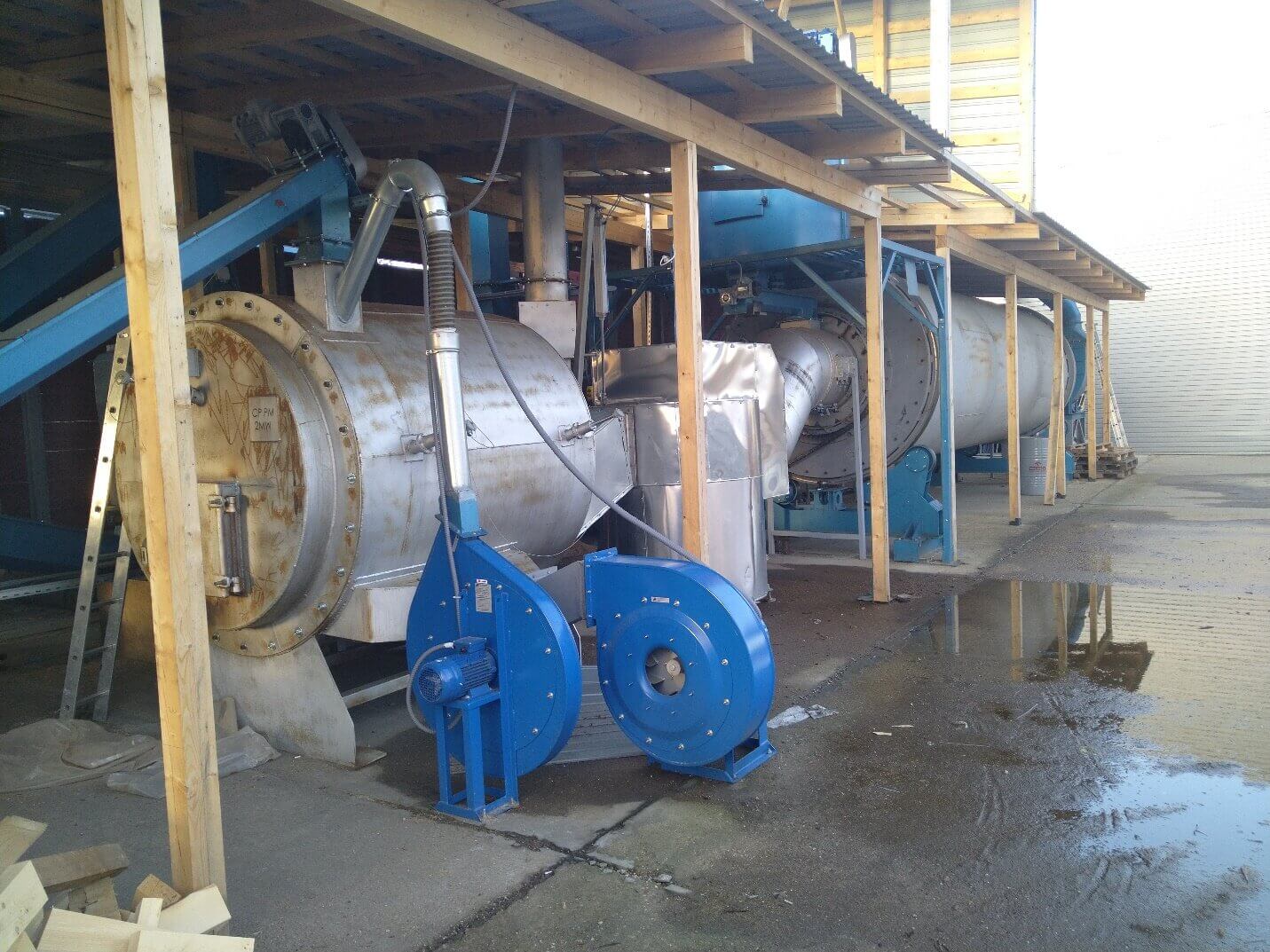
Pelleting waste and by-products
Waste to pellets: a by-product of your production can become pellets that you sell or burn in your own boiler. Based on the type, moisture and quantity of the by-product, we design and build a line for your residue alone.

What you gain by pelleting by-products
No disposal costs
You stop paying to haul away and store a residue that takes up space and deteriorates.
Pellet sales
Pellets are dense, dry and uniform, so they are easier to sell and transport than the loose raw material.
Your own fuel
Pellets from husks, sawdust or straw replace gas or firewood in your boiler house.
Which by-products can be pelleted
This overview is based on technical literature and industry practice. For each raw material, we make the final assessment from data on its moisture, composition and quantity.
| Industry | By-product | Pellets for | Preparation | On a ring-die pellet mill |
|---|---|---|---|---|
| Wood, furniture | dry sawdust and shavings | fuel (A1 if the wood is untreated), bedding | below about 15% moisture, no dryer needed | yes |
| Wood, forestry | wet sawdust, wood chips, offcuts, bark | fuel (bark: more ash) | crusher and dryer | with preparation |
| Wood | untreated pallets, furniture offcuts | fuel | metal removal | with preparation |
| Arable farming | wheat, barley and rapeseed straw | fuel, bedding, ruminant feed | bale shredder and mill | yes |
| Arable farming | maize stover, cobs | fuel | remove soil, which wears the die | yes |
| Fruit growing, viticulture | prunings | fuel | chipping and grinding | yes |
| Oil mills | sunflower husks (loose, 70–100 kg/m³) | fuel (ash about 2.4%) | abrasive; reinforced design | yes |
| Oil mills | oilseed cakes (6–9% oil) | animal feed | grinding | yes |
| Flour mills | bran, cereal husks | animal feed | no special preparation | yes |
| Soya processing | soybean hulls | ruminant feed | no special preparation | yes |
| Nut processing | walnut and hazelnut shells | fuel | blended with sawdust: walnut up to about 10%, hazelnut up to about 30% | with preparation |
| Sugar factories | sugar beet pulp (pressed, about 24% dry matter) | feed (6–10 mm pellets) | drying to about 11% moisture; soil wears the die | yes |
| Breweries | brewers' grains (75–80% water) | feed for cattle, sheep, horses | spoils quickly; drying to 10% moisture or less | with preparation |
| Distilleries, bioethanol | stillage, DDGS (about 11% moisture) | animal feed | up to about 20% in pig and cattle feed; more weakens the pellet | yes |
| Fruit processing, wineries | grape pomace (up to 68% water), apple pomace | fertiliser, fuel, feed | spoils quickly; drying | with preparation |
| Food industry | former foodstuffs, bakery residues | animal feed | packaging must be removed completely; feed regulations apply | with preparation |
| Coffee | spent coffee grounds (about 65% water) | fuel | drying to below 10% moisture | with preparation |
| Mushroom growing | spent substrate (about 70% water) | fertiliser | drying to about 28% moisture | with preparation |
| Livestock, biogas | manure, bedding, digestate | fertiliser | see the manure page | with preparation |
| Slaughterhouses, fish processing | bones, feathers, fish waste | fertiliser | only after processing under the animal by-product regulations | under special conditions |
| Municipal and industrial waste | plastics, RDF/SRF, tyres, sludge | alternative fuel | special equipment and permits | no |
How we assess your by-product
- Dry matter: we calculate capacity on dry matter. Brewers' grains and pomace contain a lot of water, so the dryer, not the pellet mill, is the deciding factor.
- Season: pomace, beet pulp and some husks are only produced for part of the year. We work out how much raw material needs to be stored or blended with another.
- Blending: brittle and abrasive raw materials often pellet better in a blend, for example husks or bark with sawdust.
- Pellet use: fuel, feed and fertiliser have different quality requirements and regulations.
If your residue is legally classed as waste, you need a waste treatment permit to process it. Under the EU Waste Framework Directive 2008/98/EC, a residue that meets the conditions of Article 5 can be treated as a by-product rather than waste, which makes selling the pellets simpler, and Article 6 sets out when waste reaches end-of-waste status.
Tell us what your residue is, how much of it you have and how wet it is, and we will propose the preparation and design a line to measure.
What this equipment is not for
Chipboard, MDF, lacquered and impregnated wood and demolition wood are not permitted in certified wood pellets: ISO 17225-2 allows only untreated wood and wood-processing residues, and glue and paint count as chemical treatment. Plastics, tyres, municipal waste and sewage sludge need dedicated alternative fuel lines and waste management permits. Waste from slaughterhouses and fish processing can only be pelleted after processing under the animal by-product regulations. If your raw material falls into one of these groups, we will tell you straight away, before we quote.
Questions about pelleting by-products
Can my by-product be pelleted?
Most plant-based by-products can: husks, oilseed cakes, bran, straw, beet pulp and sawdust. Tell us what the residue is, how wet it is and how much you have, and we will assess the preparation it needs. The table above shows what is possible for the most common raw materials.
Is capacity calculated on wet or dry weight?
On dry matter. The pellet mill works with dried raw material, so 10 tonnes of wet brewers' grains yield far fewer pellets than 10 tonnes of dry husks.
What size of dryer do I need?
That depends on how much water has to be removed. For wet raw materials such as brewers' grains and pomace, the dryer is the largest part of the line and of the energy cost.
Do hard materials such as husks or beet pulp wear the die?
Yes, abrasive raw materials and those containing soil wear the die and rollers faster. That is why we recommend a reinforced design and a spare set for them.
What about seasonal raw materials such as pomace?
The raw material is dried during the season and stored, or the line is planned to run on another raw material out of season.
Can I sell the pellets as certified fuel?
Wood pellets from clean wood can reach the ISO 17225-2 classes. Agri-pellets from straw and husks contain more ash and are sold as agri-pellets, mostly for boilers designed to burn them.
What if the waste is of animal origin?
Waste of animal origin can only be pelleted after processing under the animal by-product regulations, in a plant approved for that purpose.
A line built around your by-product
Tell us what residue you have, how much of it and what you want from the pellets. Based on that, we assess the preparation and design a line for your by-product alone.
In your enquiry, tell us:
- what by-product you have and which process it comes from
- how much you have per day or per year, and in which season
- how wet it is, if you know
- what you want the pellets for: fuel, feed, fertiliser or sale
Send a photo of the raw material to office@amtehnolog.com. We reply within 24 hours.